

Start with the room, not the sample
Flooring samples all look convincing under shop lighting. What separates them in a real house is what happens over the next few years: whether the room gets wet, how much traffic crosses it, whether there's heating underneath, and what's directly below the boards.
In practice, most Dublin jobs come down to three materials — laminate, luxury vinyl tile and engineered wood. Solid timber still turns up in period properties, but it asks more of the subfloor and the room's humidity than most modern installations can offer.
Laminate: hard-wearing and forgiving on cost
Laminate is a printed decorative layer over a high-density fibreboard core. Good laminate is very hard on the surface, which is why it holds up in hallways, living rooms and bedrooms where the main enemies are grit, furniture and pets.
Its weakness is water. The core is wood-based, so standing water that reaches a joint will swell the board, and a swollen board can't be flattened back out — it has to be replaced. Water-resistant ranges buy time against spills; they don't make a laminate floor a wet-room floor.
Laminate fitting starts from €20/m². It's usually floated over underlay rather than glued, which makes it one of the quicker floors to fit once the base is ready.
Luxury vinyl tile: the one that doesn't mind water
LVT is a vinyl product, so water does nothing to the plank itself. That makes it the default for kitchens, bathrooms, utility rooms and hallways off a front door — anywhere a mop or a wet coat is part of normal life.
It's also thin and dense, which means it transmits the shape of whatever it's laid on. A lump, a crumb of old adhesive or a dip in the screed will show through a glued LVT floor, so preparation matters more here than with a thicker floating floor. That preparation is a real part of the cost, not an upsell.
LVT fitting starts from €20/m². It can be glued or click-fit; which one suits depends on the subfloor and the room, and it's one of the things a survey settles.
Engineered wood: real timber, and refinishable
Engineered wood is a genuine hardwood wear layer bonded to a plywood or HDF core. The core keeps it far more stable than solid timber through the swings in humidity an Irish house sees between a damp autumn and a heated winter.
It's the only one of the three that can normally be sanded and refinished, which changes the arithmetic on a floor you expect to keep for decades. How many times depends on the thickness of the wear layer — that number is worth asking for before you buy.
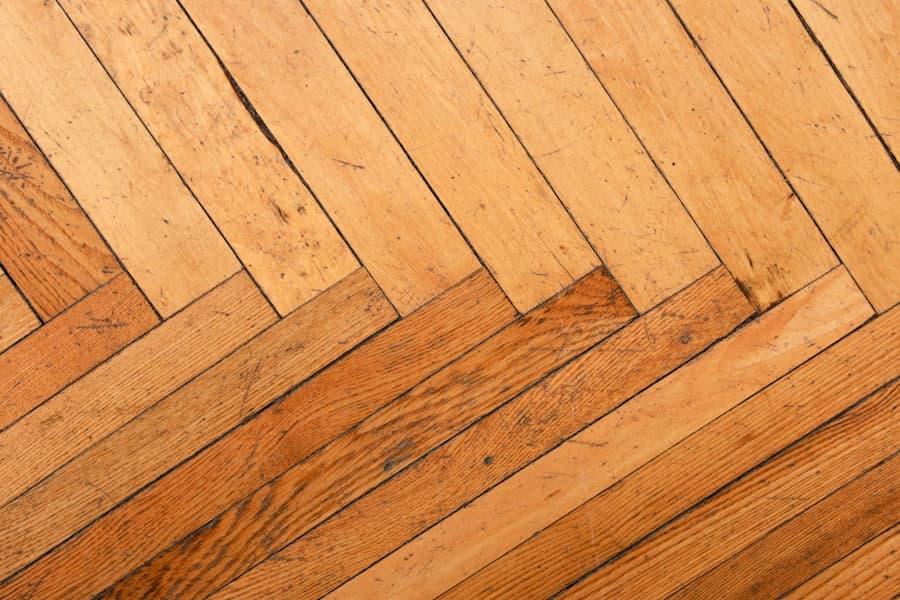
Engineered wood fitting starts from €50/m², and parquet or herringbone layouts from €40/m² — the pattern takes longer to set out and cut than straight planks, which is what the difference reflects.
The four questions that usually decide it
Rather than comparing specifications, it's faster to answer these about the specific room:
- Does this room get wet? If yes, LVT, unless you have a reason it can't be.
- Is there underfloor heating? Check the material's maximum surface temperature and whether it's approved for UFH — some products are, some aren't, and fitting an unapproved one usually voids its warranty.
- Is this an apartment? Look up what the lease or management company requires for acoustic underlay before you choose the floor, because the underlay spec can change what fits under the door.
- Do you want to be able to refinish it later? Only engineered wood realistically offers that.
What the subfloor does to all of this
Every one of these floors sits on something, and that something decides how much work happens before a single plank is laid. A concrete slab may need levelling compound or a damp check. Old floorboards may need screwing down, patching, or overboarding. A previous floor may have left adhesive that has to come off.
This is the part nobody can fully price from a photograph. The existing covering hides the base, so the honest sequence is: lift it, look, then confirm. Where extra preparation turns out to be needed, it gets explained and agreed before the work continues rather than appearing at the end.
Common questions
Which floor is best for a Dublin apartment?
Can I put wood flooring in a bathroom?
Is laminate or LVT better with a dog?
Do I have to replace the skirting when the floor changes?
Services this guide covers
More guides
- What Subfloor Preparation Actually Involves — and Why a Price Can ChangeThe part of a flooring job you never see is the part that decides how the finished floor behaves. Here's what preparation covers, what gets checked, and why a quote can only be firm about it after the old floor is up.
- What Goes Into a Flooring or Painting Quote in DublinA rate per square metre is a starting point, not a price. This explains what the guide rates cover, what sits outside them, and what to send so a written quote comes back accurate the first time.